History
The following history of Spring Creek Township was presented by Miss Ruth Shanley of Ridgway at the monthly meeting of the Elk County Historical Society on July 6, 1968, at the “Shanley Homestead” in Hallton, Pennsylvania.
Spring Creek Township
By Miss Ruth E. Shanley
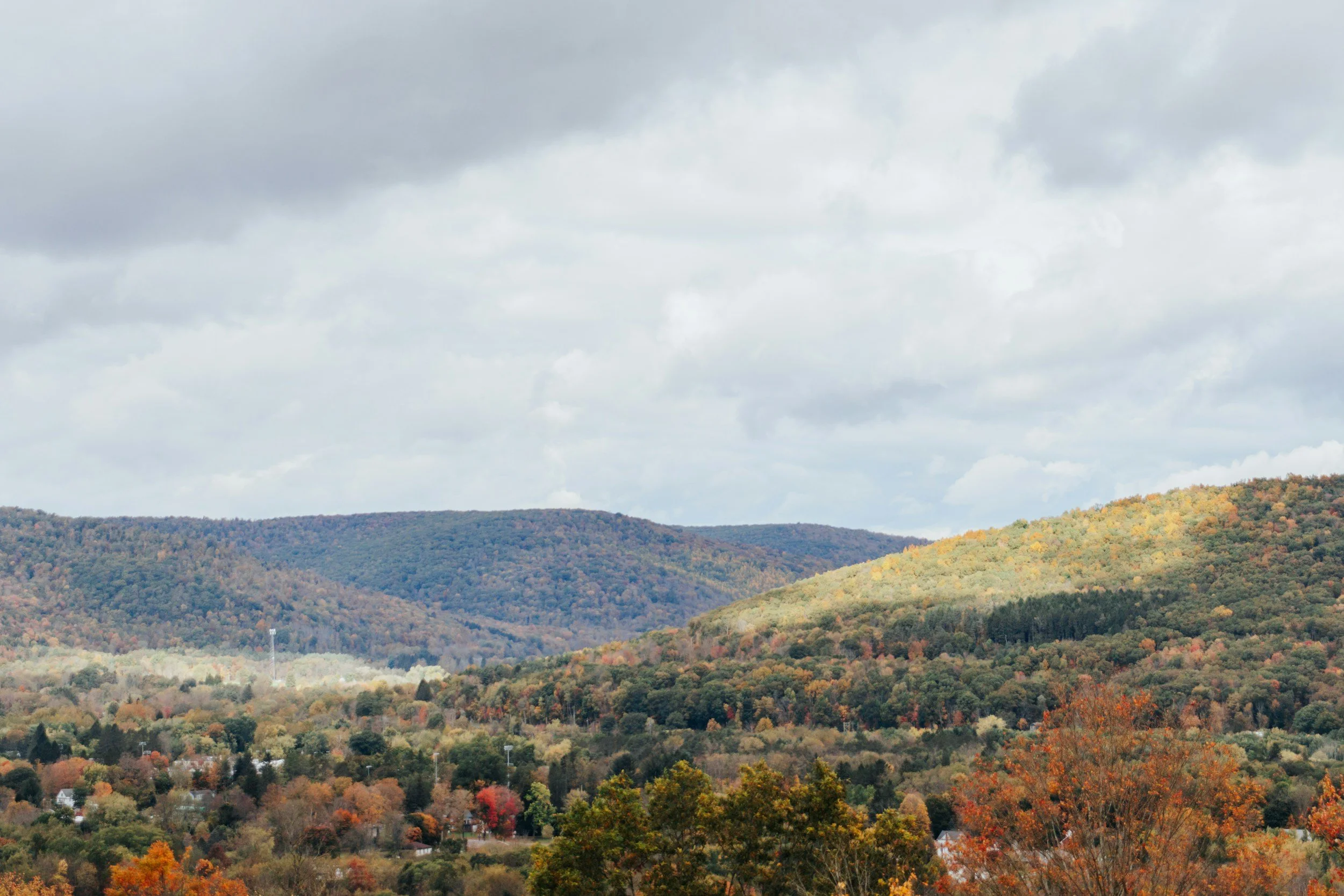
Spring Creek Township was named after the native creek which enters the Clarion River about one mile west of Irwin’s Mills.
The main River enters the township about eight miles below Ridgway. A little stream flowing north through the extreme southeast corner is known as Little Toby Branch. In the southwest corner is Maxwell Run. Laurel Run and dozens of other rivulets run into the streams named from the various summits. Near Lake City, one of the largest plateaus in Elk County exists and there also is the divide of the southwest part of the township. The norther divide is between Bear Creek and one of the sources of Spring Creek.
As early as 1852-53 coal deposits were developed near Spring Creek village, at Laurel Run Forks in 1871 and at Irwin’s Mills in 1877. So well was the coal established in 1873 that it was proposed to build a narrow gauge road 18 miles from this point to Sheffield.
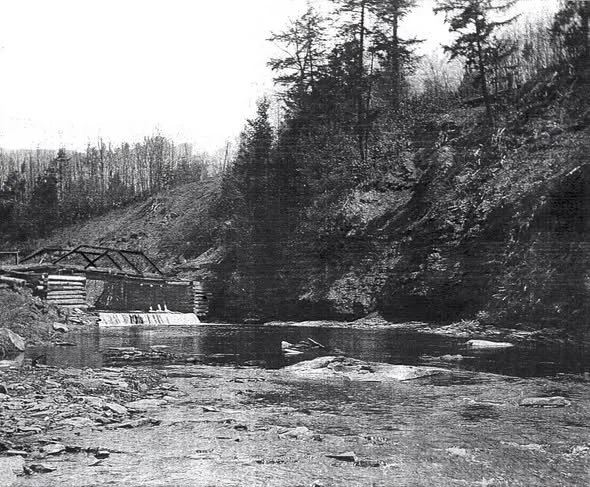
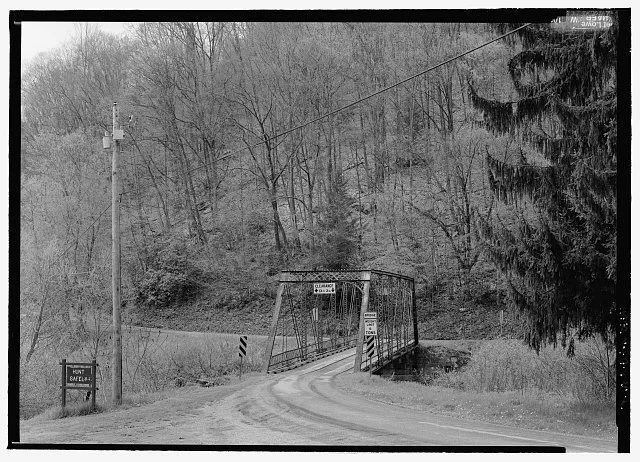
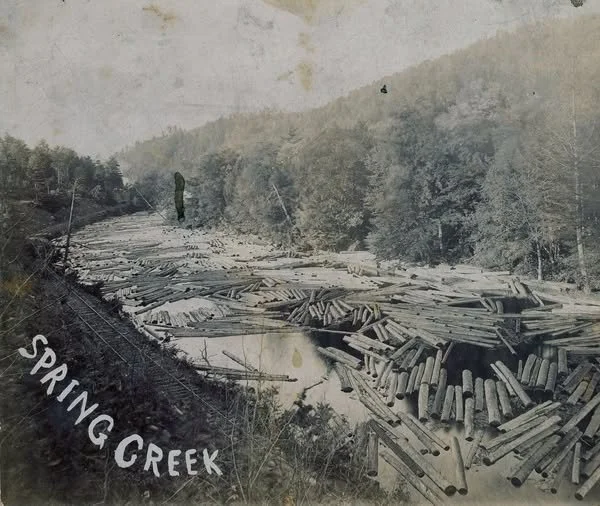
The first assessment of Spring Creek Township was made in 1846. Among the industries taxed were the sawmills of William Armstrong, George Ryan and George Dull and the saw and grist mills of Payne & Watterson. The other resident taxpayers were James, Crow, Squire, Carr, Henry Dull, William Evanas, Jonathan Beatty, John Grant, John Gwen, Thomas Irwin, Robert Jewett, Thomas Lynde, Eben Lee, John Lukins, William Payne, W. Redline, Ephraim and Anderw Shaul, Rufus Gallatin, Silas Blake, Zack Double, Isaac Nichols, Orville Thing, Dan Wolford, Francis Mayberry and Pater Conner who operated a shingle machine.
In 1850, there were in Spring Creek Township 15 dwellings, 15 families, 91 inhabitants, four farms and three industries. The population of Spring Creek Township in 1880 was 467. In 1888, there were four Prohibition, 120 Republicans and 119 Democratic votes cast or a total of 243 representing 1,215 inhabitants.
The first settlements were made by Phillip Clover and Sowers in 1831-32. The first school house was built in 1840 at the mouth of Spring Creek and opened by John Knox. Miss Crow and Horace Warner followed. In 1846 Miss Clements opened a subscription school at George Rhines’ home on Maxwell Run. In 1852 the directors authorized the building of a schoolhouse at Arroyo but this was not erected and Miss Thom was compelled to teach over the ox-shoeing establishment of Thomas Irwin. In 1856, a schoolhouse was built between Arroyo and Spring Creek at a cost of $338, $115 of which was subscribed on condition that the building could be used for religious and other meetings.
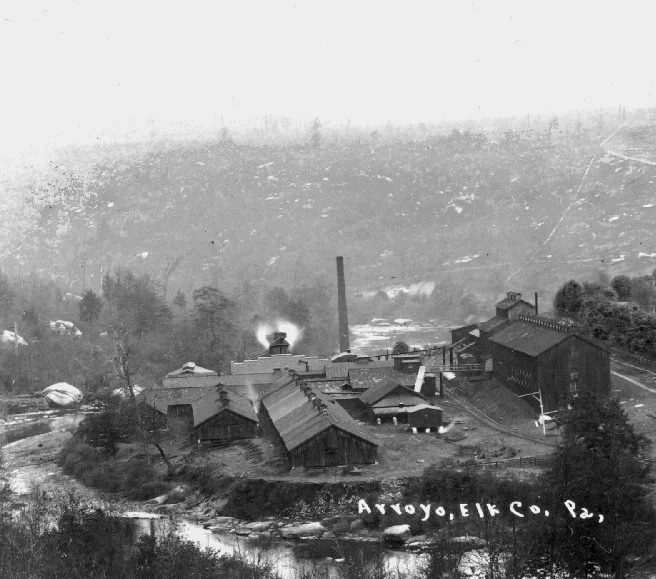
Arroyo, 10 miles from Ridgway and on the Clarion River, was founded by Thomas Irwin and was a lumber town. The Arroyo post office was removed from Irwin’s in April, 1880, to Beech Bottom (Arroyo) and E.W. Rogers was appointed postmaster. The Arroyo Bridge Company was incorporated in April, 1883, the object being to bridge the Clarion at Arroyo. This was later accomplished. Arroyo became a tannery town, had a Smith Bros. Store, a Methodist Church and a two room schoolhouse.
The site of Portland Mills was a great wintering place for elks (sic.) An early settler and hunter was Ralph Hill. He lived the life a hermit and when Portland Mills became too settled and civilized for him he moved on up Spring Creek to Forest County.
General Wade was an early settler. He and his friend Slade came to the headwaters of Little Toby in 1798 and settled temporarily. In 1803, they built a log house on the east bank of Little Toby near the mouth. In 1806, when Wade and Slade were hunting near what is now Blue Rock, they saw an Indian girl watching them. Wade persuaded her to go to his home where he introduced her to his wife. In 1809, she married Slade, Chief Tamisqua performing the ceremony. They moved to where Portland Mills now is and established a trading post there.
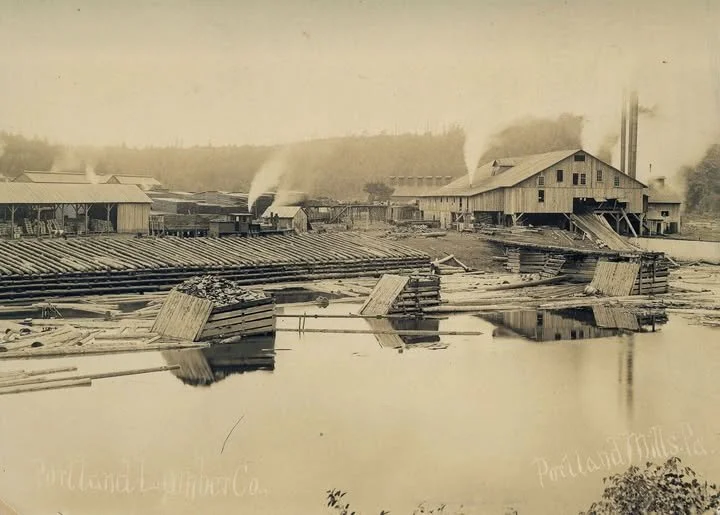
Portland Mills once had a hub factory, a match factory, a kindling wood factory and a sawmill. There was a large tannery and a railroad across the Clarion River to Bear Creek. An early schoolhouse was on the hill back of the present Game Commissioner’s home. The present schoolhouse is thought to have been built about 1898 or earlier in the ‘90s. It served as a gradeschool and a three year high school and about 1912 became a Spring Creek Township three year high school. Two hundred five pupils were graduated from this school, many going on to Ridgway to complete the fourth year. The last class graduated was in 1942.
Portland Mills once had two general stores, Smith Bros. and the Portland Lumber Company store; also the Lepsch jewelry store, a Maccabee Hall where literary meetings were held, a Methodist Church, and a livery stable. It also had its own doctors, Dr. Leitzell and Dr. Stilley, in succession. The railroad from Hallton to Croyland was the Clarion River or P.S.&N. The large part of the passengers were the school children and the worst disgrace that could be accorded any one was to be reported for misbehavior by Mr. Flaherty the conductor.
Carman is a comparatively modern settlement. Here was the hospitable Carman House of Mr. Casey. Early in 1890, a society of the Protestant Episcopal Church was organized at thispoint and a large Catholic congregation assembled here at stated times to worship. HiramCarman moved into the township in 1858 and for 32 years was prominent in the industrial and social life of the township.
Croyland was near Carman and at the terminal of the Clarion River Railroad. There were sand and stone quarries in the vicinity.
Large areas of land in the vicinity of Spring Creek or Hallton were owned by the Gardners, Rhines’ and Elliotts. The area around the mouth of Maxwell Run was once called Rhines Town and George Rhines mentioned as a school director in 1846 was the ancestor of the Rhines families, many of whom still reside in Ridgway. In an 1890 election, O.T. Minor is mentioned. His descendants still own a home in Hallton. The Elliotts were the parents of Mrs. Russ Jones and Mrs. Sam Miles. Thomas Jefferson was a supervisor and the ancestor of the Jeffersons at Lake City. Reuben Mohney was a tax collector. He and his family moved from Irwintown to the present Harbridge farm as a caretaker for a Mr. Hall. Later a large farm house was built for the Mohneys. Mr. Mohney was a lumberman and also conducted a meat market atPortland Mills. A school in sight of the farm was the Mt. Pleasant School and early teachers were Rhonda Wilson, Cozey Milliron, Gertrude Mohney and Mina Van Aken Shanley.
At one time there were three churches at Hallton, Methodist, Church of Christ and Free Methodist. Sunday School is still conducted in the Church of Christ.
Later industries at Hallton were the chemical works along Spring Creek and at one time, about 1900, a lamp black factory at Maxwell Run and a sawmill along the Clarion near the mouth of Maxwell Run.
Lake City was supposed at one time to have had a lake from which it got its name. It was a lumbering district and then became an area of fine farms.
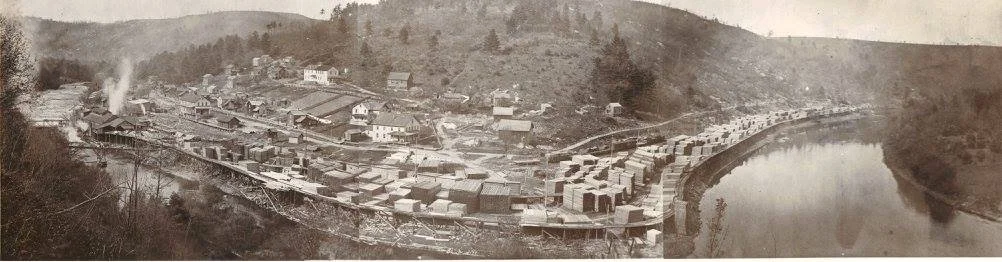
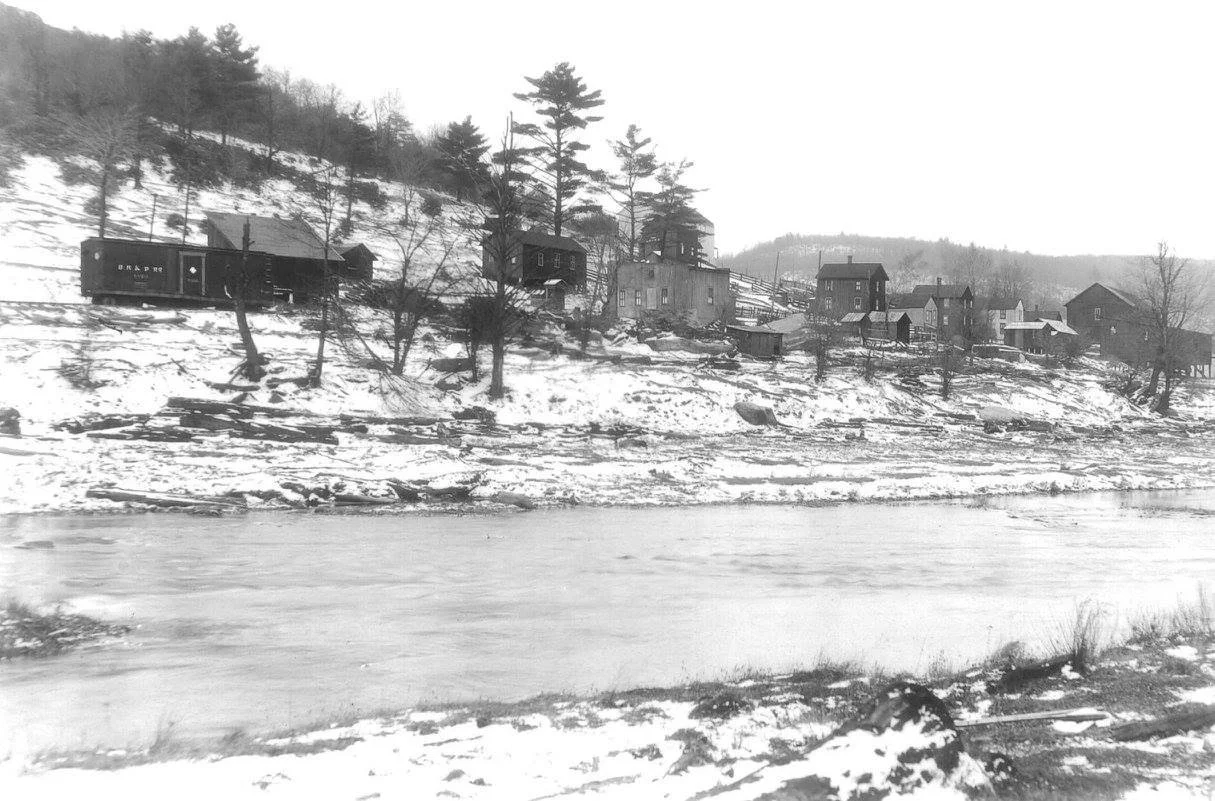
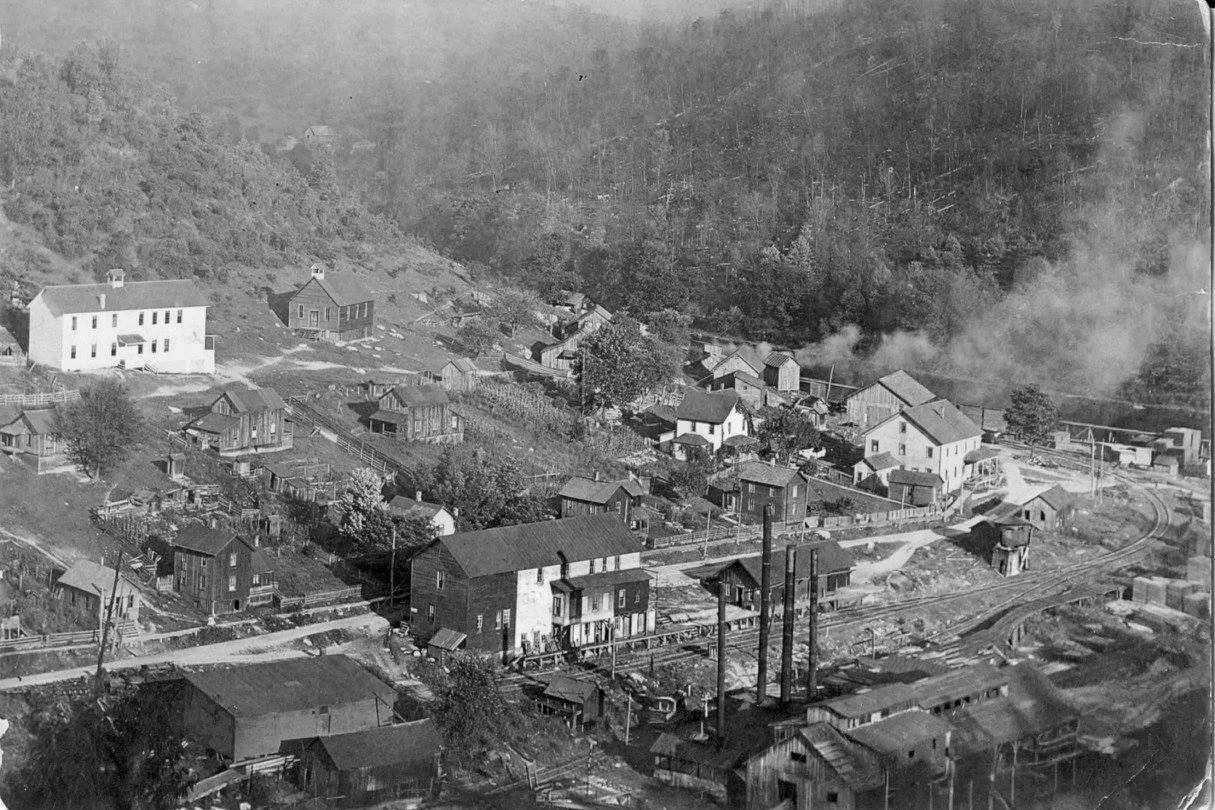
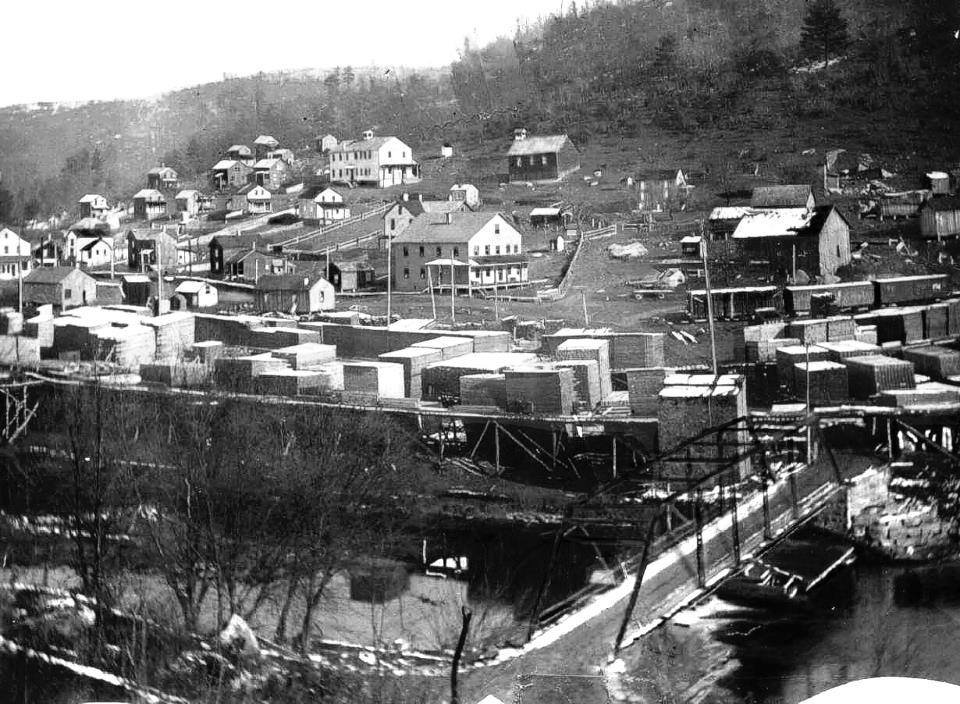
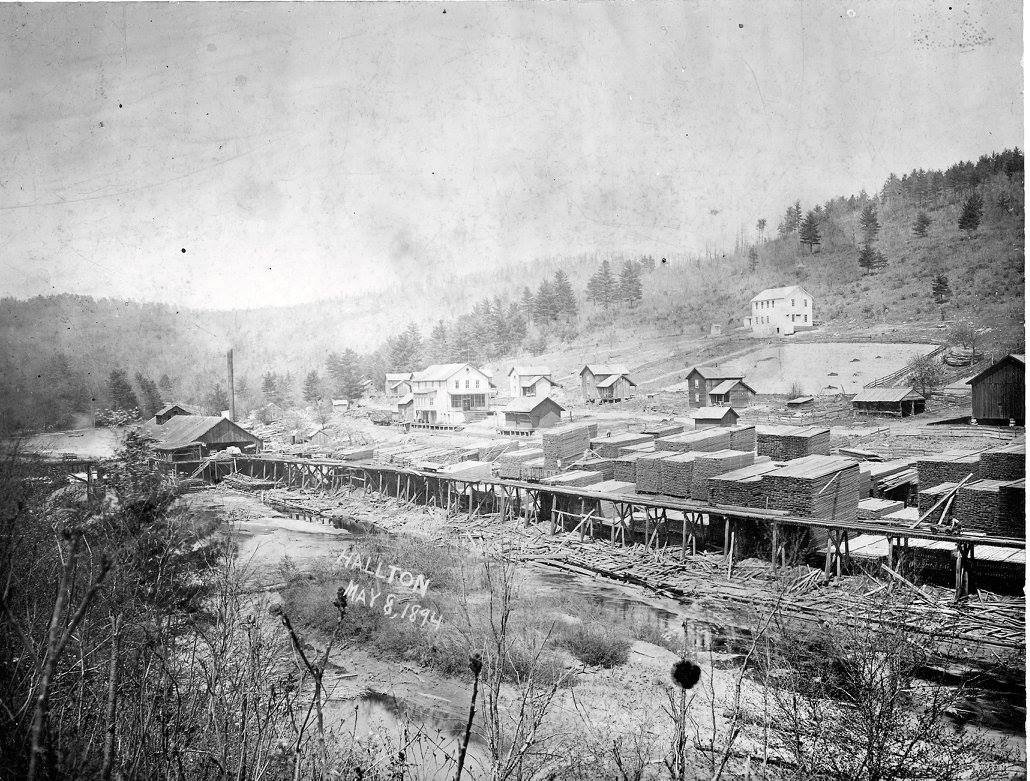
Hallton was first known as Spring Creek when Job Paine and James Watterson built a sawmill in the area in the 1820s.
Spring Creek was a rally point for raftsmen during the rafting era of lumbering along the Clarion River. In the 1880s, James K. Gardner and John G. Hall formed the Hall, Gardner & Co and constructed a sawmill. The town became known as Hallton. The Clarion River Railway was completed to Hallton in 1891, and the Tionesta Valley Railway that came down Spring Creek from Sheffield also served Hallton. Hall would die in 1889 and William H. Hyde (Joseph S. Hyde's son) would join the venture. In 1905 Frank Clawson would construct a wood chemical plant up Spring Creek from Hallton on the west bank of the creek. The Hall, Gardner & Co sawmill would close in 1909, but it would take until 1948 for the Clawson Chemical Company plant to close, which also forced the abandonment of the Clarion River Ry.
Source: Rob Keith | Brockway Area Historical Society